跨越山海,共赴绿色航程——“一带一路”船舶绿色低碳技术国际培训班侧记
10月,武汉,桂花的香气弥漫在整座城市。一间教室里,20余名技术人员围坐在一起,面前展现的,是新能源动力系统数字孪生模型、船用绿色新能源应用案例。他们来自印度尼西亚、马来西亚、越南、埃及、泰国、文莱等11个“一带一路”共建国家——有海事管理机构的船旗国检察官,有船舶检验部门的技术骨干,也有造船和航运企业的业务负责人。他们最为关注的话题之一,就是——船,怎样能跑得更清洁。
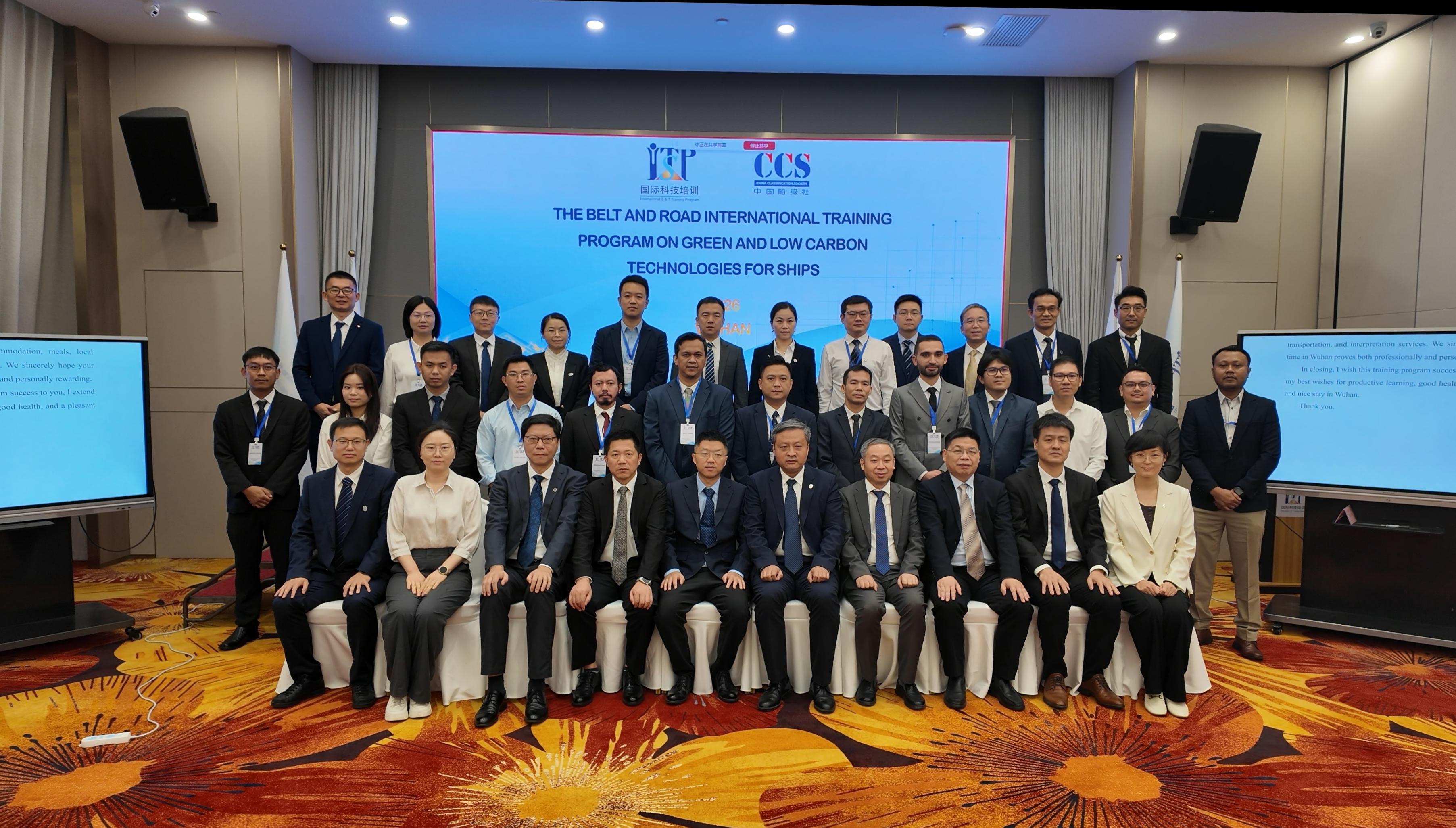
This is a scene from the international training course on "Belt and Road" green low-carbon ship technology hosted by China Classification Society (CCS). As the global shipping industry collectively turns towards the framework goal of net zero greenhouse gas emissions, China's green standards and practices are extending from the banks of the Yangtze River to farther coastlines. In the classroom, the latest practices and technical standard systems for green low-carbon ship technology in China are gradually unveiled; outside the classroom, an international collaboration spanning mountains and seas and linked by "green" is taking root in the classification society field.
适用于11个国家的低碳技术课程
“We are willing to strengthen policy alignment, experience exchange, and project collaboration with industry partners from various countries, share the achievements of green development, and implement the concept of a community with a shared future for mankind. We believe that with the concerted efforts of all parties, the green and low-carbon transformation of ships will undoubtedly promote global shipping towards a higher level of green development and inject new momentum into maritime cooperation under the 'Belt and Road' initiative.” Zhang Qingwen, Vice President of CCS, stated at the opening ceremony.
此次培训是我国科学技术部国际合作司2025年度发展中国家技术培训班项目之一,旨在帮助发展中国家掌握可持续发展理念、知识和技能,提升可持续发展能力,更好应对未来绿色智能产业变革。
The curriculum is centered around the word "green": systematically introducing China's green and low-carbon ship technology system, as well as CCS's theoretical exploration and practical experience in ship inspection and technical standards. It highlights China's innovative achievements in areas such as green ship design promotion, new energy power system research and testing, and intelligent green ship construction. Teaching methods are diverse, incorporating expert lectures, industry seminars, and on-site investigations, enabling theoretical knowledge to be implemented in workshops, shipyards, and laboratories.
为什么是“绿色低碳”这个主题?答案藏在全球航运的大势里。按照国际海事组织2023年通过的温室气体减排战略,国际航运在2050年前后要实现温室气体净零排放,2030年国际航运温室气体年度排放总量较2008年至少降低20%,力争降低30%。新的燃料、新的动力、新的船型,成为各国竞相求解的“未来考题”。谁先掌握答案,谁就握住标准与市场的先机。
It is precisely because of this that the value of this training goes beyond the moment. Its objective is to explain and share China's technological achievements in areas such as green ship design, alternative fuels, and energy conservation and emission reduction, thereby promoting the interconnectivity of related standards, such as green and low-carbon ship technology and international ship inspection technology, across different countries. For the representatives from 11 participating countries, this is a technical "learning journey"; for China Ship Inspection, it is an endeavor to expand the influence of its standards globally.
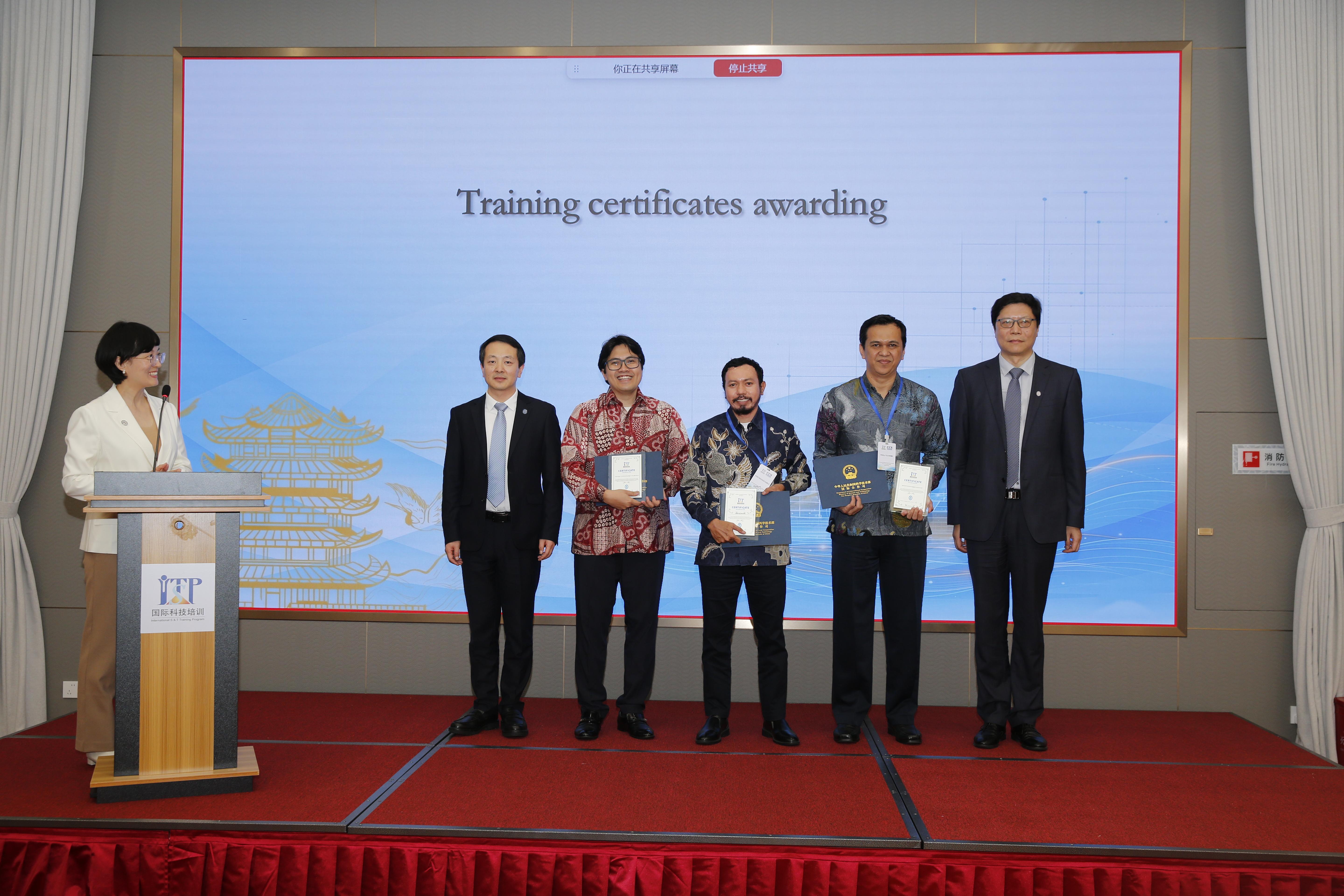
事实上,这并不是CCS第一次“敞开大门授课”。早在2019年和2024年,CCS就成功举办了两期船舶检验技术管理国际培训班,向来自坦桑尼亚、沙特、泰国、越南、马来西亚、印尼、尼日利亚等16个国家的船舶检验管理部门、海事管理部门、港口管理部门、航运部门的学员介绍了中国的船检技术、船检制度以及航运业、造船业的发展情况及最新技术,受到了学员的热烈欢迎,促进了技术、标准和中国方案“走出去”。
Similar training programs are forming a system and creating a tradition. As the third batch of pilot units for building a strong transportation nation, CCS organizing such projects is a concrete manifestation of implementing the pilot task of "enhancing international cooperation and exchange capabilities in ship inspection."
Through this training, we can also see the consistent openness of CCS: promoting the coordinated development of the green and low-carbon shipping industry, shipbuilding industry, and related supporting industries; facilitating international cooperation between China and partner countries in the fields of maritime affairs, ship inspection, and shipping; and advancing the interoperability of standards related to green and low-carbon ship technology and international ship inspection technology. This is an "amplification" of China's international influence in green technology and a concrete step forward in the high-quality development of the Belt and Road Initiative in the transportation sector.
携手印尼航运伙伴共同迈向绿色未来
Outside the classroom, the steps of collaboration have already begun.
Indonesia is known as the "Nation of a Thousand Islands." Shipping serves as the lifeblood of its national economy, with its fleet mainly consisting of general cargo ships, oil tankers, and container ships, making the need for green transformation urgent. Meanwhile, China Classification Society has established profound technical and standard reserves in areas such as alternative fuels for ships and the application of green technologies. The needs of both sides are highly compatible and complementary.
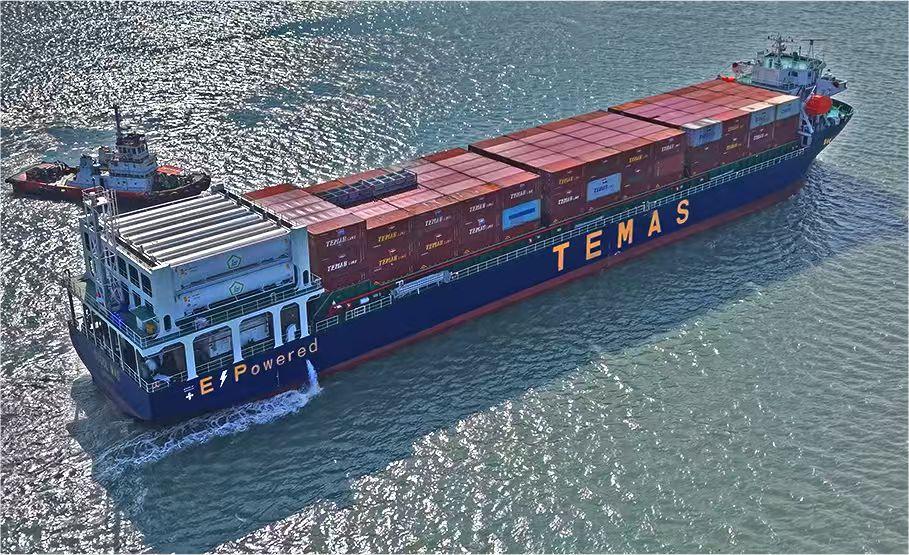
2024年6月,CCS Singapore Branch visited Indonesia's renowned shipping company WARUNA SHIPPING GROUP and conducted specialized technical training for the company. Subsequently, both parties continued to strengthen connectivity and focused on the ship repair sector. In December of the same year, CCS Wuhan Rules Research Institute provided risk assessment technical services for the Indonesia-based TEMAS Group's 488 TEU LNG (Liquefied Natural Gas) powered vessel "DIGUL MAS." This vessel completed its maiden commercial voyage in August 2026, becoming Indonesia's first LNG-fueled ship and the first in TEMAS Group's fleet of eight green LNG-powered container ships, marking the formal beginning of Indonesia's local green shipping development. In December 2024, two 5,500-ton oil tankers, reviewed and inspected by CCS, officially began construction at Hubei Zhijiang Hongju Shipbuilding Co., Ltd.
2025年,CCS参加亚洲船东协会第34届会议暨印尼航运周活动。在国际海事组织秘书长阿塞尼奥·多明格斯的见证下,CCS与BKI(印尼船级社)签署《船用生物燃油应用指南》开发意向书。双方在船用替代燃料研究、标准制定与实践推广方面开展深入合作,有力推动船用生物燃料在东南亚航运市场的广泛应用。
事实上,CCS与BKI早在1991年就签署了合作协议,今年10月进行又一轮续签。双边合作协议涵盖多领域业务和技术合作。双方还建立了高层互访机制,以紧密的合作共同为印尼和亚洲区域海事行业提供更好的服务与支持。
“We are very looking forward to BKI and CCS collaborating further from the signed cooperation agreement to deeper technical cooperation, working together on joint research, promoting pilot applications of technology, jointly developing practical standards, and continuously enhancing both parties' certification service capabilities.” Aditya Trisandia Pramana, Deputy President of the Statutory Department of BKI and one of the Indonesian trainees participating in this training, expressed his hope that in the future, both parties will focus on building technical capabilities, selecting pilot projects, and engineering applications of emerging marine technologies, leveraging their respective advantages to bring substantive results to the green transformation of the shipping industry.
Currently, China and Indonesia are jointly building a China-Indonesia community with a shared future that has regional and global influence. China's "Belt and Road" initiative is deeply aligned with Indonesia's "Global Maritime Fulcrum" strategy. Cooperation in emerging fields, such as the green shipping transition, is comprehensively expanding, and collaboration between CCS, Indonesian authorities, and industry is also continuously strengthening. At present, there are 177 Indonesian-flagged ships under CCS classification, with a total tonnage of 2.33 million tons and an average ship age of 11.57 years.
Regarding the direction of cooperation, Indonesia's shipping industry has clear expectations.
“For us, CCS is not just a classification society, but also a technical partner.” 参加培训的学员印尼WARUNA船厂工程部经理优素福·穆南吉·萨赫兰与高级船长韦利·扬德里期待在三个方向开展务实合作:一是前置研发与规范协同,联合开发适配印尼水域的“以电池为主、B50生物燃油(由50%粗棕榈油炼制的生物柴油与50%传统化石柴油均匀混合而成的船用替代燃料)为备份”的混合动力方案设计,提前开展规范解读与AIP(原则性认可),减少建造阶段重大变更,提升审图效率;二是共建双燃料船舶改造标准,联合编制适用由传统船舶改造的“LNG+B50”双燃料船舶的指南,并针对印尼暂无在用LNG加注设施的现状,以B50生物燃料作为可靠备用动力,保障船舶持续运营;三是强化能力建设与技术共享,联合开展检验流程、风险评估、绿色规范实操研讨,提升内部审核能力,并借助CCS全球经验,助力印尼完善替代燃料基础设施与监管体系建设。
Indonesian Ministry of Transportation's Senior Advisor on Technology and Energy in Transportation, Antonius Arief Priyadi, suggested that for the long-term perspective, a normalized mechanism of technology cooperation involving multiple parties could be established. The cooperation entities include Indonesia's maritime authorities, CCS, Indonesian and Chinese shipyards, and related industry stakeholders. This mechanism will coordinate regulatory training, standards mutual recognition, joint scientific research, and case-specific evaluations of classification matters, promoting technology sharing, local industry development, addressing Indonesia's gaps in marine engineering and ship inspection, advancing shipping decarbonization, and enhancing the competitiveness of the shipping industries of both countries.
Collaborating with Malaysia's MTT to Deepen Methanol Power Development
MTT航运有限公司(简称MTT)成立于2010年,是马来西亚领先的集装箱班轮运营商,在马来西亚国内集装箱航运市场的份额约为46%。
CCS Kuala Lumpur Office作为CCS扎根马来西亚的本地化服务支点,持续为MTT提供检验协调与技术咨询服务。MTT船队约30%的船舶入级CCS。近年来,双方合作重心逐步向新造船检验、绿色技术应用倾斜,合作关系从基础入级业务稳步迈向深度项目协同。
MTT在临海市回浦船舶修造有限公司(简称回浦船厂)建造2艘1.25万载重吨国际航行化学品兼油船,由CCS承担审图与建造检验工作。该船搭载柴油、甲醇双燃料主机,舱体采用节镍型双相不锈钢,树立了高标准的环保与技术标杆。围绕这一重点绿色项目,CCS为MTT及其合作方提供定制化技术支撑。
在2025年6月,CCS总部国际业务运营处组织专家团队,联合MTT、德国监理NSB以及回浦船厂开展甲醇燃料动力船专项技术交流。交流聚焦甲醇燃料船舶泄漏防控、探测灭火、主机运维等实操课题,合力夯实船东与船厂建造甲醇动力船舶的技术底气。
The boundaries of cooperation are continuously expanding, extending from technical projects to the establishment of industry consultation mechanisms and high-level exchanges. In October 2025, MTT’s Operations Director Li Guangshan was appointed as an honorary member of the CCS Singapore Advisory Committee. Leveraging this regional maritime cooperation platform, MTT has been able to stay in sync with CCS's cutting-edge technical specifications and standard developments. In July 2026, MTT Chairman Dato' Sri Wang Jianli, Managing Director Huang Lianxing, and Operations Director Li Guangshan specially visited the CCS International Ship Inspection Business Operations Center to deepen high-level interactions and strategic communication between the two sides.
本次培训班共有两名来自MTT的学员,他们也畅谈了对双方后续合作的期待。
MTT's Maritime Manager Jason Zhong introduces that multiple ships will be newly built at Chinese shipyards in the future. On one hand, MTT hopes that CCS can provide more support for their new shipbuilding projects, green power retrofit projects, etc.; on the other hand, they also look forward to CCS offering specialized training programs to help the team promptly grasp the latest industry standards and compliance requirements, as well as providing timely emergency response service support for MTT.
“CCS is currently the most suitable classification society for MTT. Presently, MTT is striving to reduce greenhouse gas emissions and urgently requires relevant emission reduction technology support. At the same time, we hope CCS can provide us with related training in artificial intelligence technology to help us enhance the operational management efficiency of our fleet and ships,” said MTT Technical Director Hairul Azri Bin Abdullah.
Measuring Sustainable Development Trajectory with Standards
CCS向印尼和马来西亚的航运伙伴敞开大门,其底气来自多年的“家底”。这条绿色低碳、可持续发展的航迹,起步并不算早,却走出了一条“跟跑—并跑—领跑”的曲线。
First look at the specifications—
In 2012, CCS released the world's first "Green Ship Specification"; in 2017, CCS took the lead in releasing the "Guide for Ship Application of Alternative Fuels"; in 2020, CCS updated and introduced the "Green Ecological Ship Specification," integrating the concept of circular sustainability. As of now, CCS has cumulatively issued over 90 green ecological-related specifications and guidelines, establishing a technical standard system covering the application of LNG, batteries, methanol, hydrogen, ammonia, biofuels, and other new and clean energy sources, supporting over a hundred green ecological additional marks.
再看“首船”——
On October 13 this year, the world's first dedicated ammonia bunkering vessel "Shenghang Yongle" completed the world's first ship-to-ship refueling of green ammonia for the Belgian-flagged 210,000 DWT bulk carrier "European Minerals" at Zhoushan Xiushan Dong Anchorage. The vessel underwent ammonia fuel refueling functionality upgrades and inspections carried out by CCS, and received the world's first ammonia fuel bunkering class certificate issued by CCS. This signifies that green ammonia has, for the first time, been commercially injected into ocean-going vessels from a Chinese port, achieving full-chain integration of production, storage, transportation, bunkering, and application.
9月1日,由CCS参与审图与检验的全球首型32.5万载重吨甲醇双燃料矿砂船“远海丝路”轮命名。该船配置了甲醇双燃料动力系统,可根据远洋航行工况灵活切换甲醇与传统燃油动力模式,满足国际海事组织针对新造船的EEDI Phase Ⅲ(船舶能效设计指数第三阶段强制能效标准),即国际现行最高能效标准。
Earlier, CCS completed the construction inspection and certification of the world's largest and China's first 10,000-ton high-end intelligent electric ship "Ningyuan Dian Kun," providing zero-carbon transportation solutions for coastal shipping.
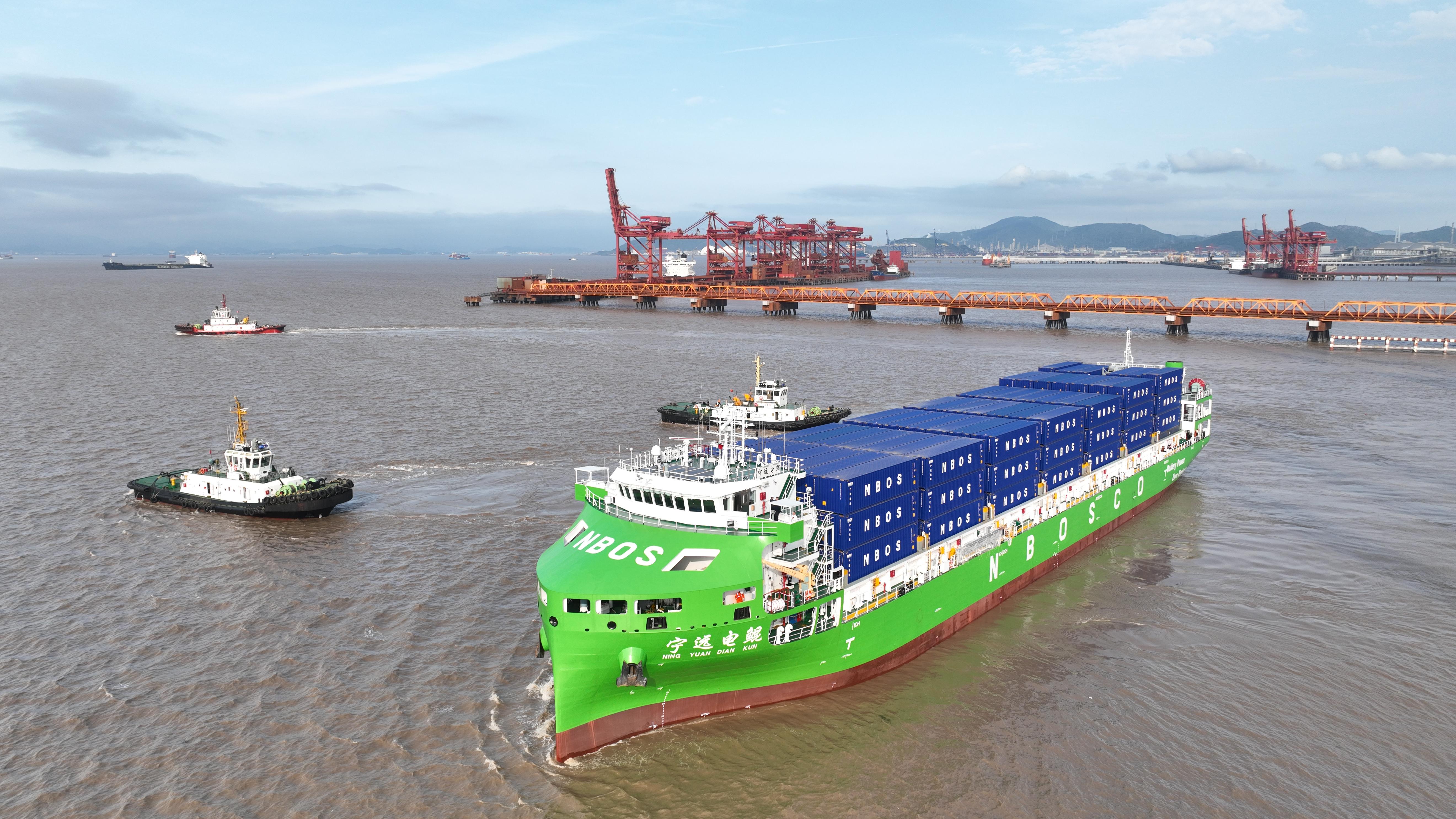
“First ships” are continuously being refreshed, stemming from CCS's early strategic planning for new-generation alternative fuels, as well as its implementation of the Ministry of Transport's work deployment, closely adhering to the core requirements of the "15th Five-Year Plan" period's "One Network, Four Transformations" green transformation initiative. In recent years, CCS has consistently conducted cutting-edge research surrounding green energies such as methanol, ammonia, hydrogen, and battery power, continuously iterating and improving the normative guide system that covers all fuel pathways, setting safety standards for industry innovation. At the same time, it proactively advances its services, establishing a complete closed loop of "scientific research and breakthroughs—standard formulation—real ship inspection," ensuring that green technologies can not only be developed but also effectively utilized with safety.
Green is becoming the distinctive undertone of China Classification Society's "going global" strategy. Looking into the future, CCS will continue to focus on new shipping industries and technologies, providing high-standard regulatory and inspection services to assist global shipping in achieving stable and sustainable green and low-carbon transformation.
□记者手记
中国船检方案助力航运业驶向净零远方
Walking out of the training class, the scent of osmanthus still lingered outside the window. The image of maritime professionals from more than ten countries sitting together discussing alternative fuels and low-carbon ship designs has stayed in my mind for a long time. This interview made me realize that shipping decarbonization has never been a solo voyage by a single country or organization, but a collective journey that requires joint efforts.
Shipping is the lifeline that sustains trade and connects islands, but the path to green transformation is not easy. Financial constraints, regulatory gaps, a shortage of technical personnel, and lagging support for alternative fuels are challenges faced by many shipowners and maritime administrators. They travel thousands of miles to China not only to learn a standard or a technology but to seek a decarbonization pathway that aligns with the realities of local shipping.
CCS hosted the "Belt and Road" International Training Course on Green and Low-Carbon Technology for Ships, which serves as a bridge for technical communication. In the classroom, there is sharing of standards, drawings, test data, and lessons learned; outside the classroom, there is practical cooperation that is applied to biofuel in Indonesia and methanol dual-fuel ships in Malaysia. What trainees take back are not only notes and course materials, but also practical project cooperation intentions.
The decarbonization of shipping does not have a one-size-fits-all solution. The fleet structures, route conditions, and industrial foundations of developed and developing countries vary greatly, and the pathways and strategies for green transition should be diverse and inclusive. The practice of CCS proves that when China Classification Society (CCS) "goes global," it is not simply about exporting standards but rather about using technology as a bridge, respecting the actual development conditions of each country, providing tailored inspection services, capacity training, and conducting joint research and development.
Rivers and seas are interconnected, sharing destiny together. "Belt and Road" maritime green cooperation is embedded in every technical exchange and every jointly developed regulation. As green ship inspection standards circulate along shipping routes, Chinese solutions continue to help the shipping industry sail toward the net-zero horizon. Li Siying